
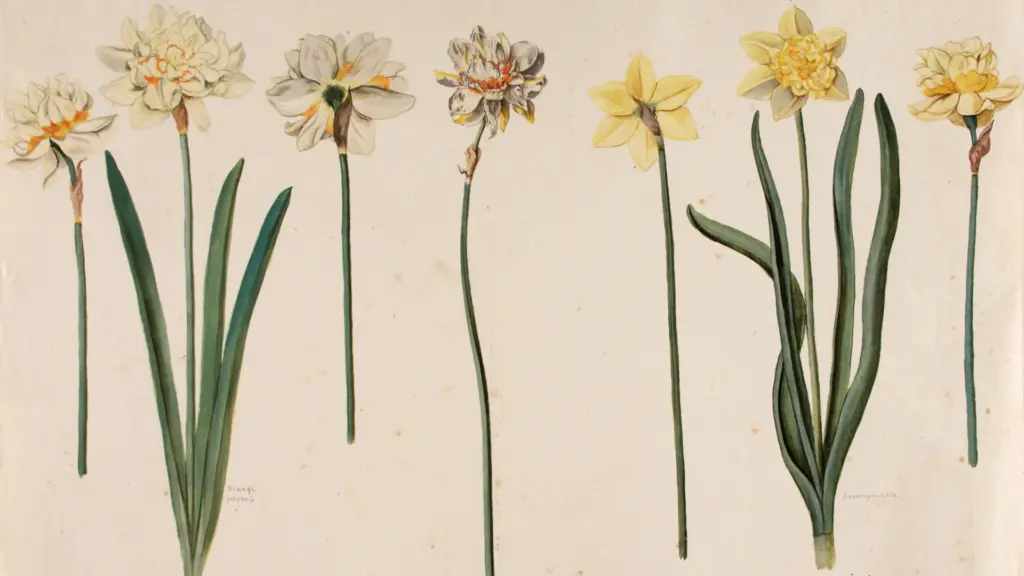
Plant Illustrations Spanning Four Centuries from the Trew Library
Exhibition at the University Library Erlangen-Nürnberg (UB), Exhibition Room of the Main Library in Erlangen
May 12–26, 2019
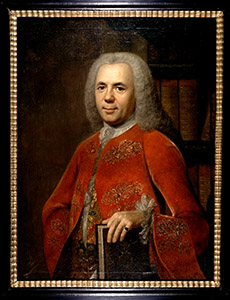
To commemorate the 250th anniversary of Christoph Jacob Trew’s (1695–1769) death, Professor Hans Dickel, Chair of Art History, and Almut Uhl, Chair of Molecular Plant Physiology, curated an exhibition focusing on Trew’s contributions to botanical book illustration.
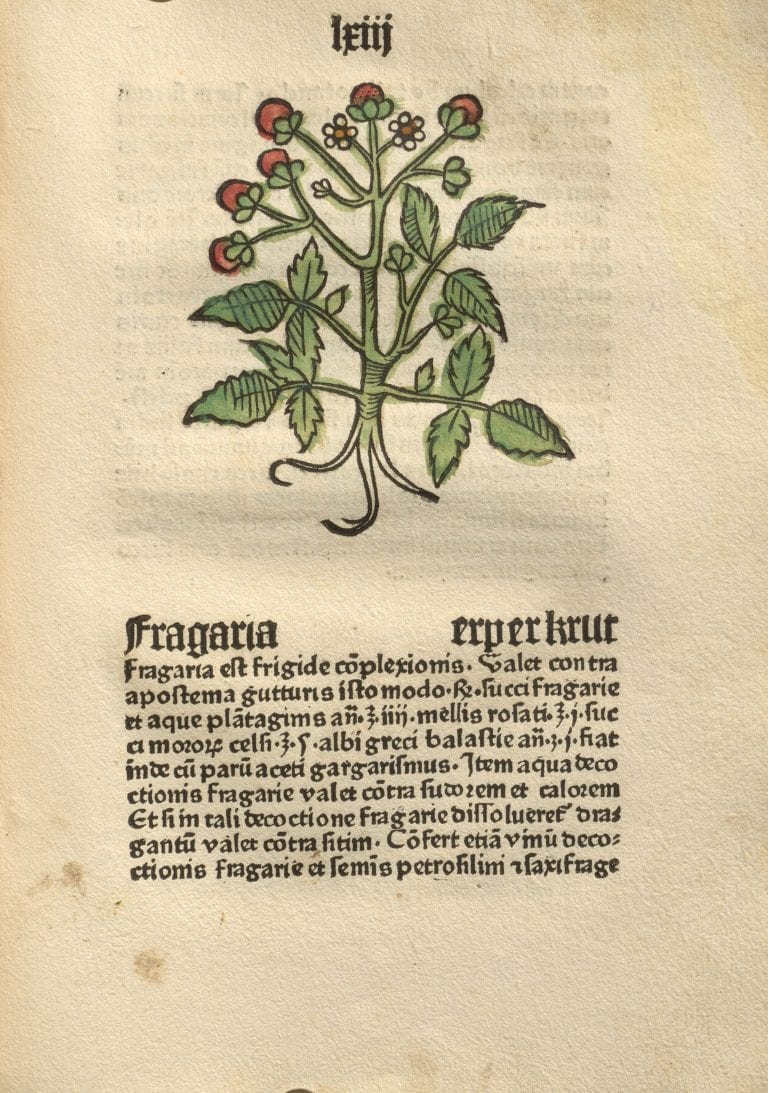
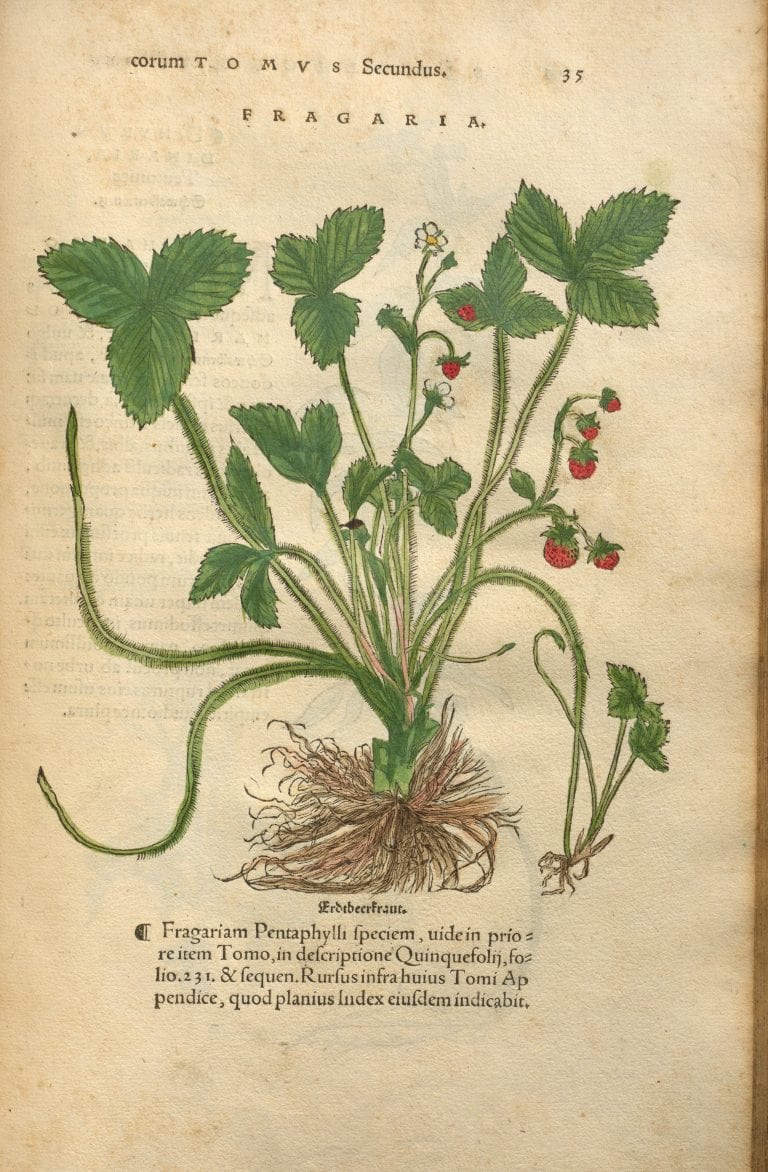
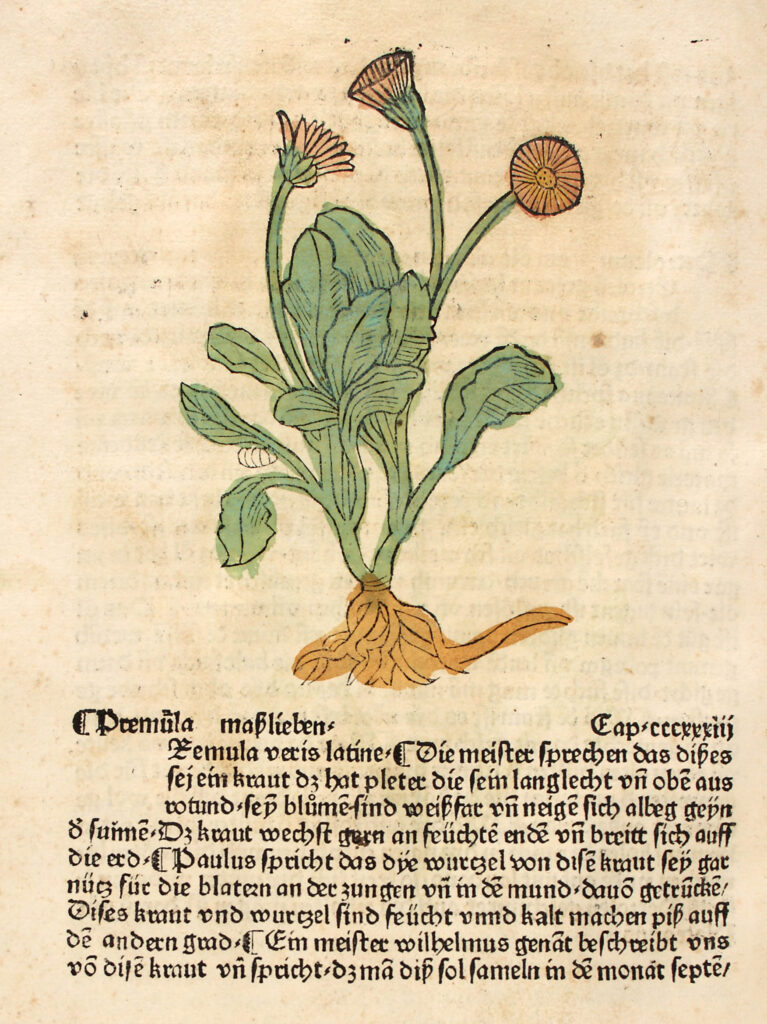
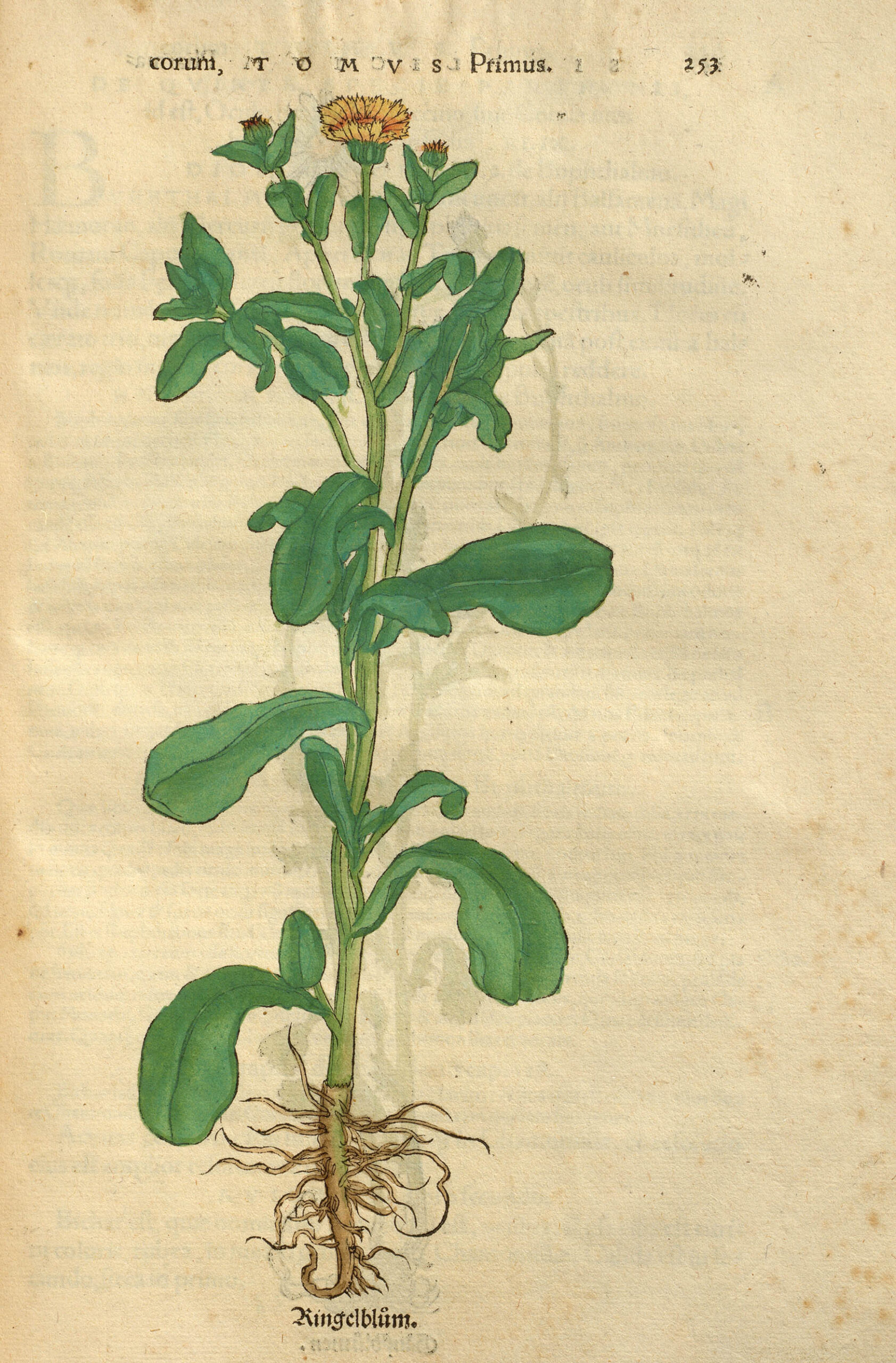
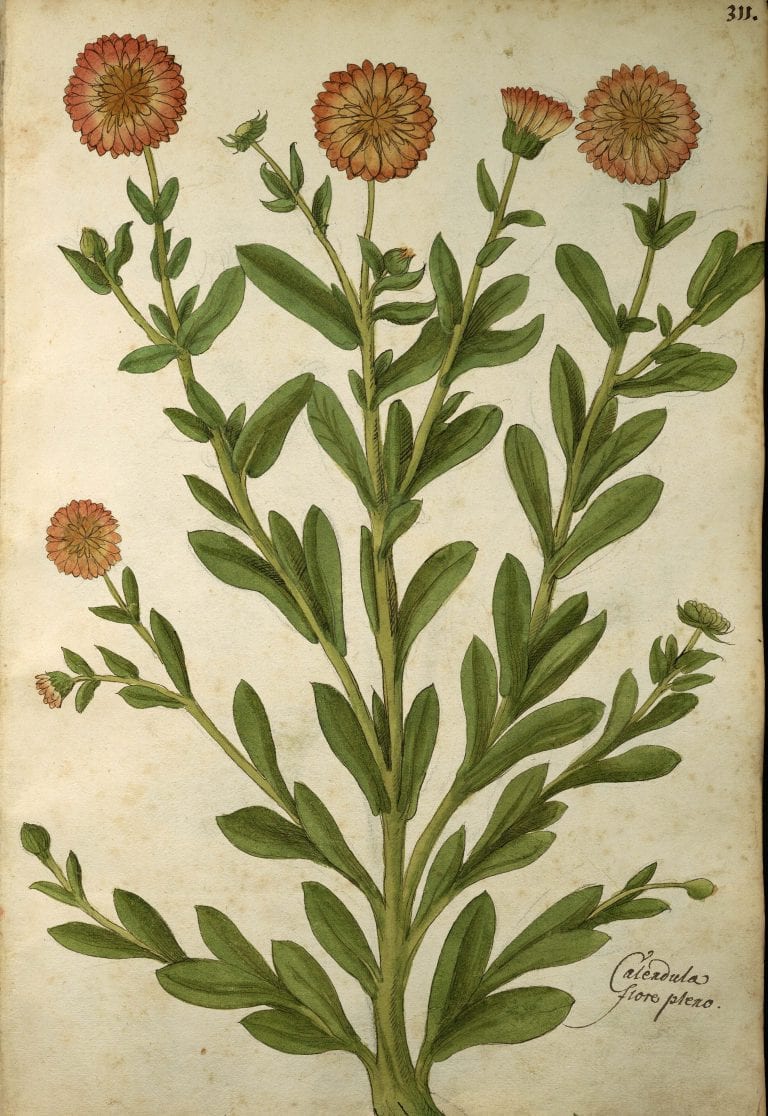
This section uses strawberries, marigolds, and comfrey as examples to illustrate how depictions of plants changed from the 15th to the 18th century, alongside the development of botany as a science. While 16th-century herbal books still primarily focused on the pharmaceutical effects of native medicinal and useful plants, the Age of Enlightenment saw the discovery of botanical laws through the use of magnifying glasses and microscopes.
For his private library, Trew acquired publications such as the Herbarius (published in 1484) and the botanical illustrations by the apothecary Georg Oellinger (1487–1557). He also commissioned preliminary drawings for Hortus Eystettensis by Basilius Besler (1561–1629). However, he set high standards for the artists: “I would like to request once again that nature be depicted as clearly as possible and that the fruit or seed be included each time, if possible.” His contemporaries praised his magnum opus highly: “Plantae selectae quarum imagines pinxit Georgius Dionysius Ehret.” Parisian scholar Bernard de Jussieu to Trew wrote in 1754″Your botanical drawings are the most beautiful and accurate ever published,” wrote P.
Follow the depictions of the strawberry plant throughout history:

Compare the different depictions of the marigold:

Comfrey through the centuries:


