From the Aes Grave to the Denarius: The Coins of the Roman Republic
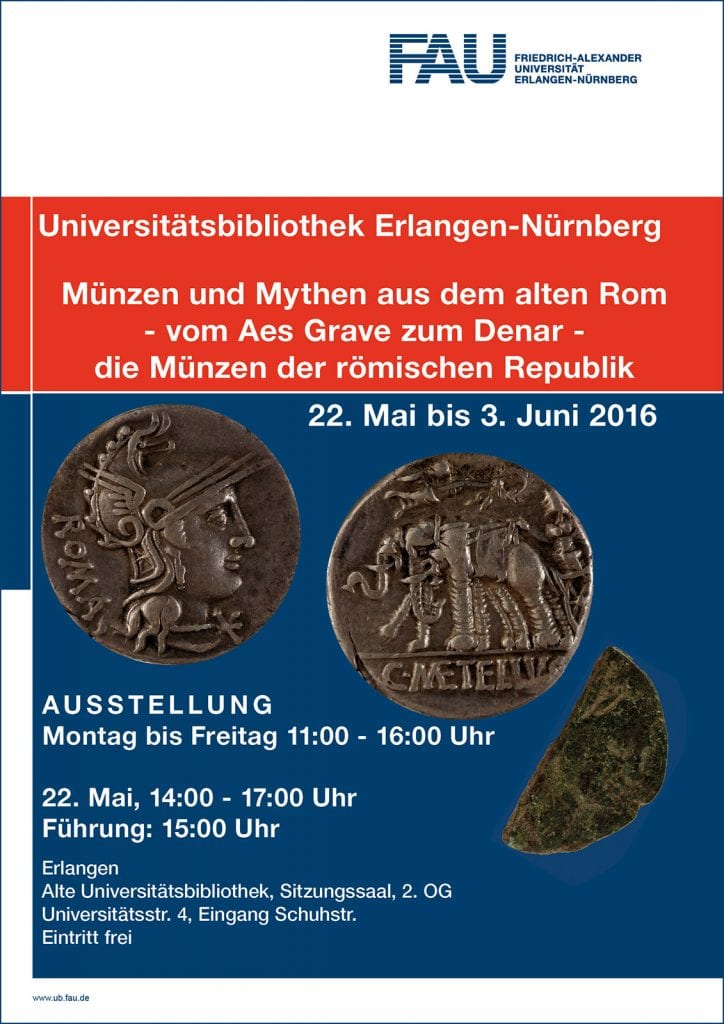
Exhibition at the University Library Erlangen-Nürnberg (UB), Conference Room of the Old University Library in Erlangen
May 22–June 3, 2016
The Roman Republic did not develop its own currency until the third century B.C. At that time, Rome was competing with the other major powers of antiquity for supremacy in the Mediterranean region. Unlike other powers, the Romans did not use precious metals for their coins but instead cast them from bronze, making conversion to the dominant Greek currency systems very difficult. However, the Romans were the first to invent a system based solely on a coin’s face value rather than its material value—a concept that still applies to our currency today.
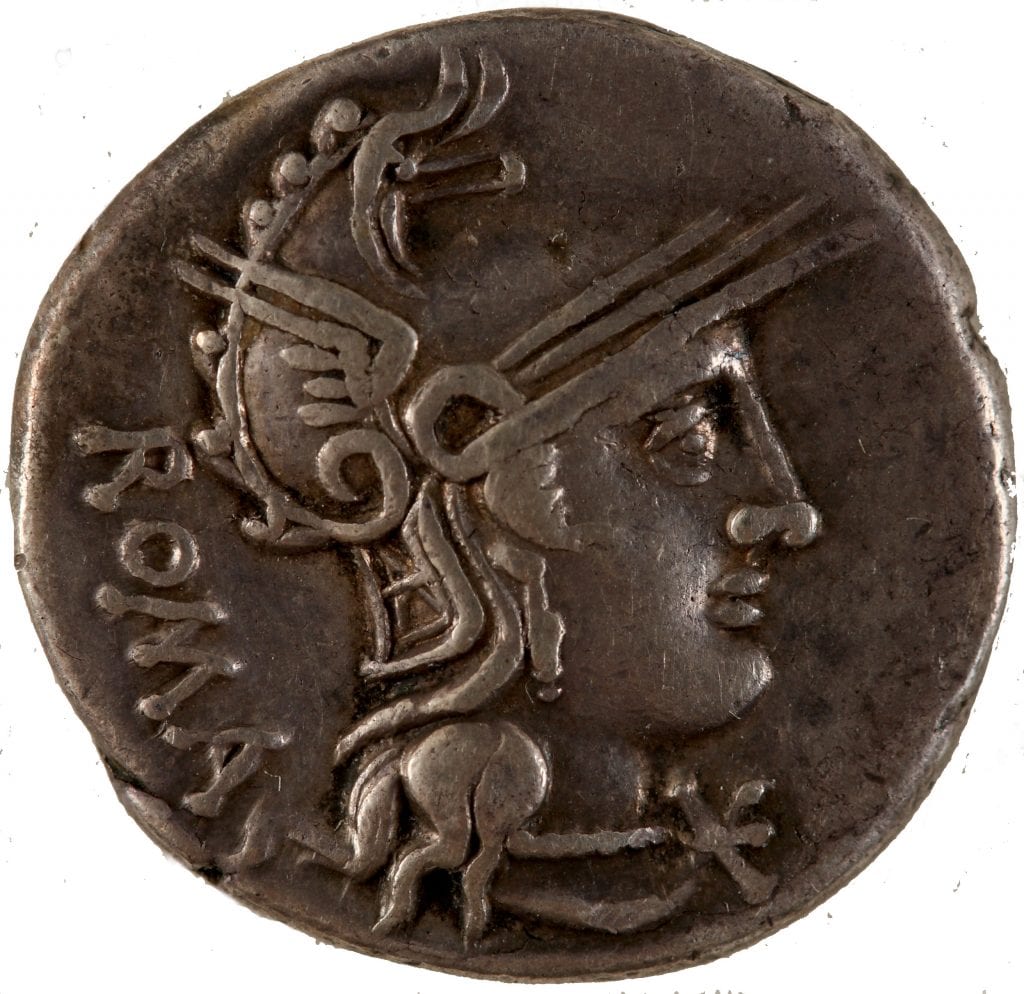
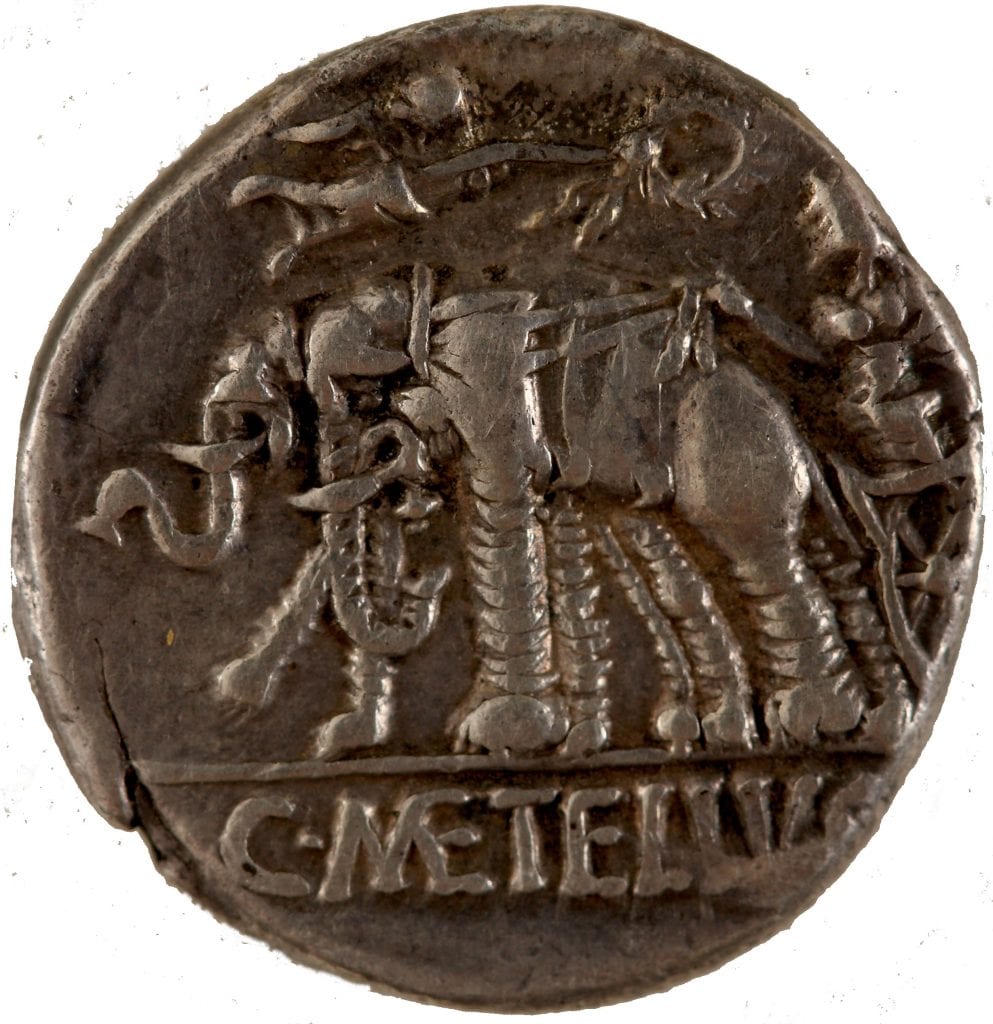
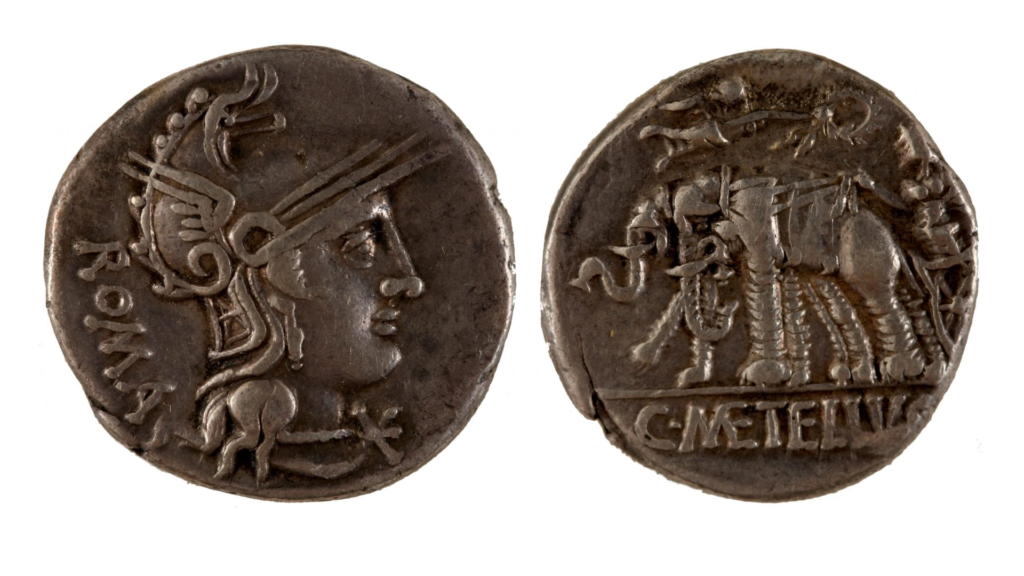
In ancient times, coins depicted the world of gods and myths, which played a crucial role in forming the community and shaping its self-image. Within a few decades, the Romans developed visual imagery for their pantheon, clearly distinguishing themselves from Greek influences in the process. For example, the city goddess Roma was depicted wearing a helmet resembling a Phrygian cap, suggesting an origin east of Greece. After all, the Romans traced their ancestry back to the Trojan prince Aeneas.
Coin from the exhibition “Von Münzen und Mythen: Vom Aes Grave zum Denar: die Münzen der römischen Republik” (“Of Coins and Myths: From the Aes Grave to the Denarius: The Coins of the Roman Republic”)