
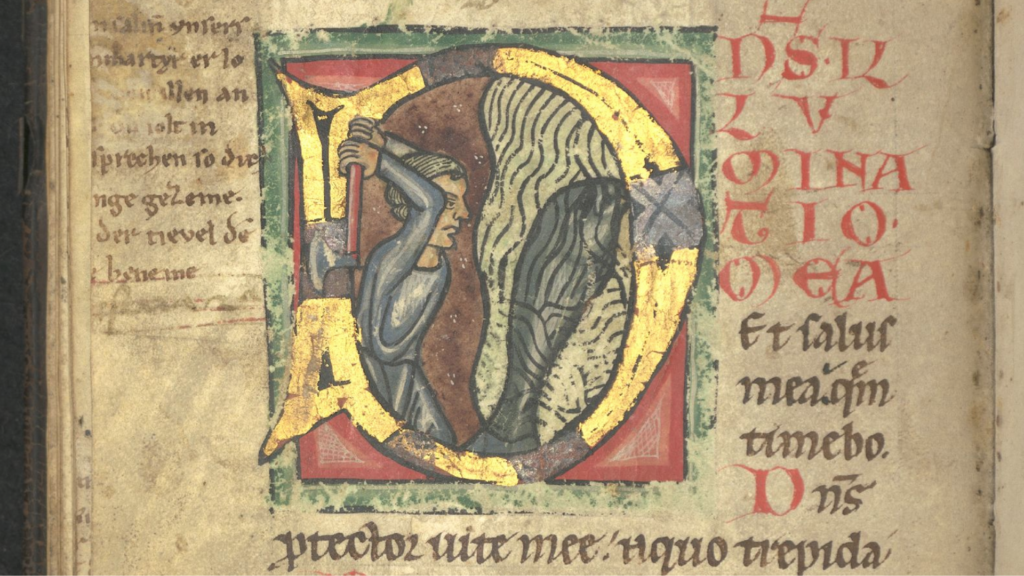
The University Library of Erlangen-Nürnberg (UB) houses two collections: the library of the former Cistercian monastery of Heilsbronn and the considerably smaller library of the Franciscan monastery of Sankt Jobst near Bayreuth. These are rare examples of book collections that have been preserved almost entirely.
Heilsbronn Monastery Library
With its collection of 594 medieval manuscripts, 674 incunabula, and approximately 1,300 printed works from the 16th and 17th centuries, the Heilsbronn library was far from small and insignificant. In terms of its manuscript collection, it could compete with large monasteries such as St. Ulrich and Afra in Augsburg and St. Emmeram in Regensburg. Over time, Heilsbronn became one of the most important monasteries in Franconia and a leading center of Cistercian mysticism in the first half of the 14th century.
As manuscripts were cataloged, their provenance was continuously recorded, thus creating a virtual catalog of the library.
Sankt Jobst Monastery Library
Although the spiritual significance of the small, short-lived St. Jobst monastery cannot be compared to that of Heilsbronn, its library provides an authentic insight into the intellectual world of the Franciscan order at the beginning of the sixteenth century. Its collection of 57 medieval manuscripts and 195 incunabula or post-incunabula fully met the needs of a mendicant order. The manuscripts clearly reveal the monastery’s connection to the Saxon Franciscan province, but many volumes also originate from Thuringia, Bohemia, Silesia, and Franconia, attesting to its extensive cultural relations.
The University Library catalog records and documents the provenance of the manuscripts and incunabula.